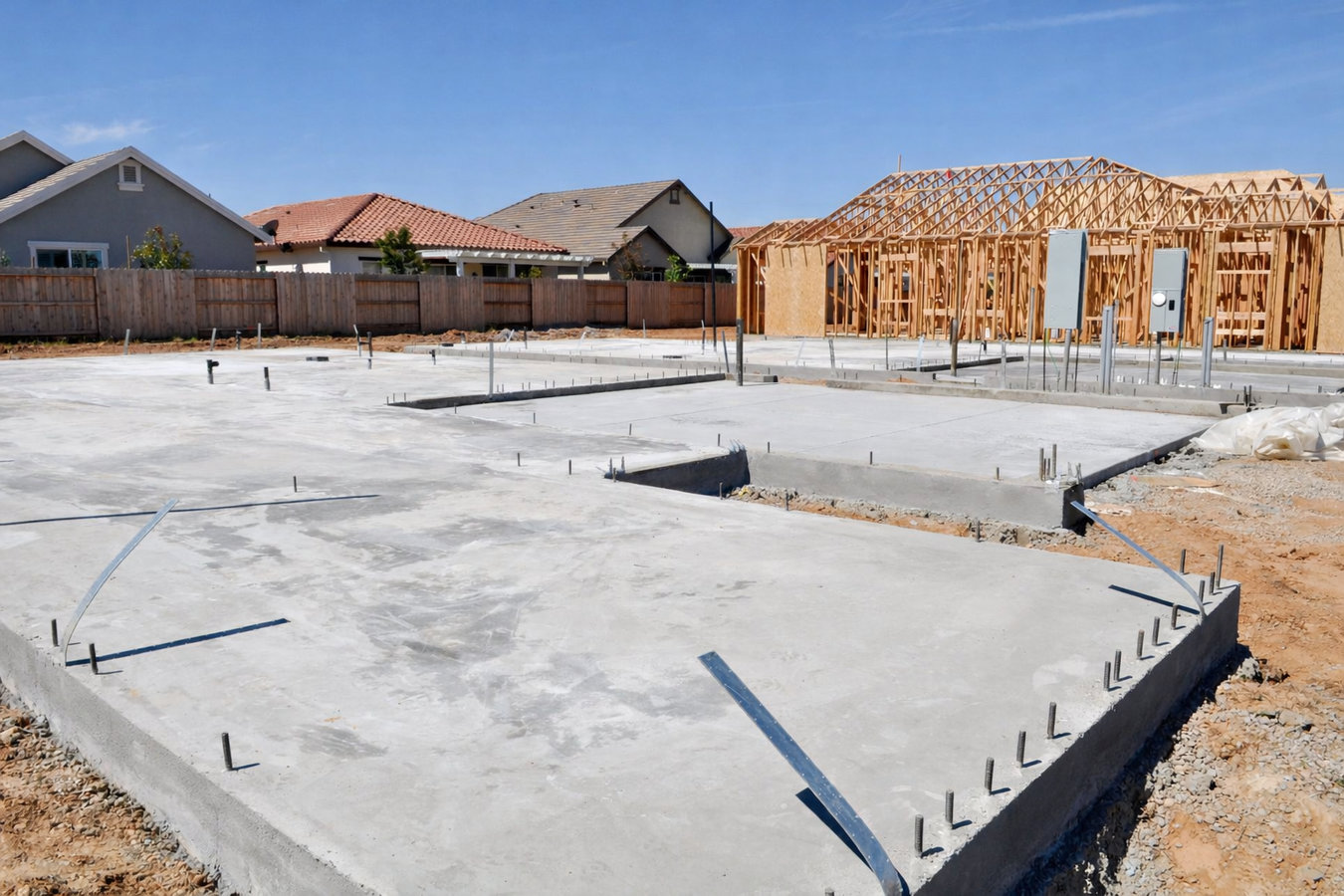
Everything built above ground depends on what is below it. Albany Concrete installs residential foundations that account for local clay soil, heavy rainfall, and Dougherty County permit requirements - from the first soil assessment to the final inspection sign-off.
Foundation installation in Albany, GA involves clearing and grading the site, compacting the soil in layers, laying gravel for drainage, placing steel reinforcing bars, and pouring the concrete - most residential projects take two to five days of active work, plus one to two weeks for Dougherty County permitting upfront.
Albany Concrete manages every stage from permit application to final walkthrough. Because clay soil movement is the leading cause of foundation problems in this area, drainage planning and soil compaction are central to every project we take on - not afterthoughts. If your project also requires slab foundation building for an addition or detached structure on the same lot, we can coordinate both phases so the drainage and grading work together.
Diagonal cracks spreading from the corners of door frames or windows, or long cracks running across a concrete floor, are signs the ground beneath your home may be shifting. In Albany, clay soil expands and contracts with the seasons, and this movement is a common cause. Hairline cracks are often harmless, but cracks you can fit a finger into deserve a professional look.
When a foundation shifts, the home's frame shifts with it - and the first sign is usually doors or windows that suddenly feel stiff, stick in their frames, or leave visible gaps at the corners. This is especially common in Albany homes after a dry summer, when the clay soil contracts and the ground pulls slightly away from the foundation.
Walk around the outside of your home after a dry stretch and look at where the foundation meets the ground. A visible gap where the soil has pulled away from the concrete means the clay beneath your home has shrunk significantly. Left alone, water will fill that gap during the next heavy rain and accelerate the problem.
If you notice a visible slope when you look down a hallway, or a ball consistently rolls in one direction across a room, the foundation beneath that section of the house may have settled unevenly. This is a common result of the soil movement that happens over time in Albany's climate and warrants a professional evaluation before it gets worse.
Albany Concrete installs slab-on-grade foundations for new homes, garages, room additions, and commercial light structures throughout southwest Georgia. Every installation includes site grading, soil compaction, a gravel drainage layer, a polyethylene moisture barrier, and a steel rebar grid - all inspected by a Dougherty County inspector before the concrete is poured. The permit process is handled by our team as a standard part of every job.
We also evaluate existing foundations on older Albany homes to determine whether targeted repairs or a full replacement makes sense. If you are building new and your project calls for a standalone structure on the same property, we can include concrete parking lot or apron work as part of the same scope so the grading and drainage tie together correctly.
Full slab-on-grade installation for homes, garages, and additions on new or infill lots across the Albany area.
On-site assessment of existing foundations on older Albany homes to determine whether repair or replacement is the right call.
Complete permit management with Dougherty County and city inspection coordination included in every project - no exceptions.
Albany sits on expansive clay soil that is common throughout southwest Georgia. Clay absorbs water and swells when it rains, then shrinks and pulls away from structures when it dries out - and that cycle happens every season, year after year. It is the single biggest reason foundations in this area develop problems, and it is why a contractor who knows Albany spends more time on soil compaction and drainage planning than what a generic concrete checklist calls for. Albany also averages around 50 inches of rain per year, making drainage a real design consideration - not just a nice-to-have. The American Concrete Institute sets the standards for how reinforced concrete should be designed and installed in these conditions.
A significant portion of Albany's housing stock was built in the 1950s through 1980s, when building practices were different from today's. If you are replacing a foundation on an older home, your contractor may uncover outdated construction underneath that needs addressing before new work can go in - and that is worth asking about before you commit to a price. We bring the same attention to local conditions in Valdosta and Moultrie, where the same soil belt and rainfall patterns apply.
We respond within 1 business day. Tell us the size of the project, the address, and whether it is new construction or a replacement. We will schedule a free on-site visit - soil conditions and drainage on your specific lot affect the cost more than almost any other factor.
We visit your property, assess the soil, check how water moves across the site, and measure the area. You receive a written, itemized estimate covering site prep, gravel, moisture barrier, steel, the concrete pour, and permit fees - with no surprise charges added after you sign.
Before any work begins, we apply for the required building permit through Dougherty County. This typically takes a few business days. A county inspector will visit before the pour to verify the prep work - that independent check is a protection for you, not a delay.
The crew completes site prep, forms the slab, places steel, pours and finishes the concrete, and cleans up. Before we leave, we walk you through the finished installation and explain the curing period - what to keep off it and for how long - so there are no surprises.
We respond within 1 business day. There is no obligation after we visit - you get a written estimate and decide from there. Our crew knows Albany's clay soil and Dougherty County requirements, so your project moves forward without surprises.
(229) 304-1369We hold a current Georgia contractor's license and carry general liability insurance and workers' compensation on every project. You can verify our license through the Georgia Secretary of State's verification portal before you sign anything - a contractor who resists that check is not someone you want building your home's foundation.
We pull the required building permit with Dougherty County as part of every foundation installation - no exceptions. That county inspector who checks the work before the pour is an independent set of eyes verifying the prep work is correct before it is permanently buried. Your foundation will be on record as inspected and built to local standards.
We serve 12 cities across southwest Georgia, and poor drainage is one of the most common reasons foundations fail in this region. Our estimates include a drainage assessment for your specific lot - because water management around your foundation is as important as the concrete itself. That is not an add-on; it is part of how we scope every job.
Every written estimate we provide covers all phases: site prep, gravel, moisture barrier, rebar, the concrete pour, permit fees, and cleanup. The number you agree to at the start is the number you pay at the end - barring a genuine unforeseen site condition we find and discuss with you before doing any additional work.
A foundation is the one part of your home you cannot easily go back and fix without enormous cost and disruption. The way we work - transparent quotes, proper permits, and drainage built into every plan - is how we make sure you only have to do this once.
Durable concrete parking lots for commercial and residential properties, designed for Albany's traffic loads and clay soil conditions.
Learn moreResidential slab foundations built with proper moisture protection and rebar reinforcement for Albany's expansive clay soil.
Learn moreCall Albany Concrete now - our crew knows Albany's clay soil and summer heat, and we are ready to get your project on the calendar before the season fills up.