Sticking doors, diagonal cracks, and uneven floors are signs your home is slowly moving. Albany Concrete raises and stabilizes settling foundations using methods matched to southwest Georgia clay soil, so the fix actually holds through every wet winter and dry summer to come.
Foundation raising in Albany, GA lifts a home that has settled or sunk back to a level, stable position - most residential jobs take one to three days of active work. Albany Concrete inspects your home first, identifies what caused the settling, and chooses the method best suited to local clay soil conditions, so the repair lasts rather than just buying you a few years.
A lot of Albany homeowners notice the signs but wait - a sticking door here, a crack there - and assume it is just the house settling naturally. Sometimes that is true. But in a city built on expansive clay, gradual settling rarely stops on its own, and a small problem today becomes a much bigger repair bill next year. If your home is more than 40 years old or sits in an area with a history of flooding near the Flint River, getting a professional opinion early is worth it. Depending on what we find, we may also recommend pairing the foundation work with slab foundation work on any connected structures that need attention at the same time.
If doors or windows that used to open easily now stick, drag, or will not latch, your home may be shifting. In Albany, this often appears after a dry summer when the clay soil contracts and pulls away from the foundation. When it happens in multiple spots at once, it is worth a closer look from a professional.
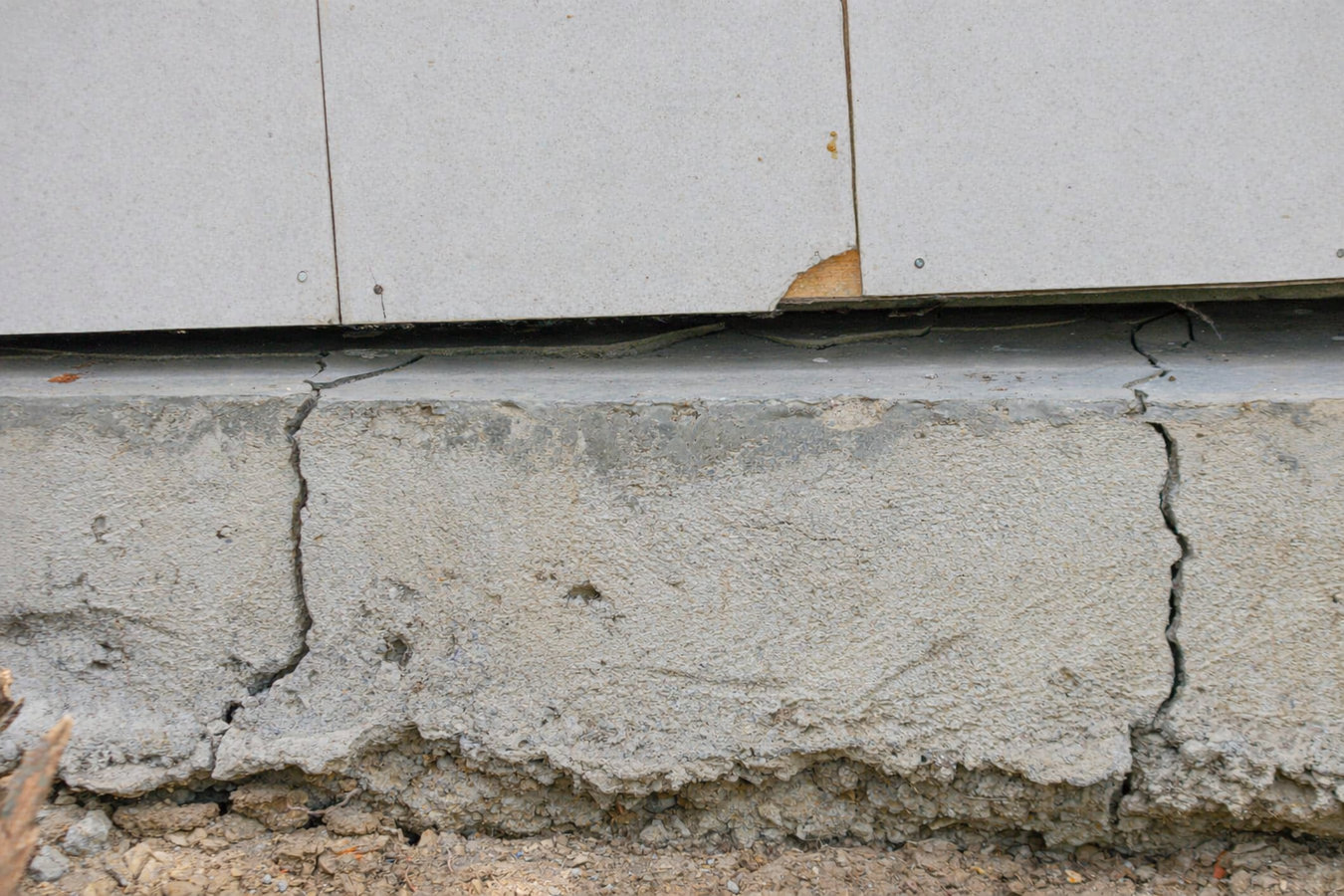
Diagonal cracks - especially ones wider at one end than the other - are a sign that part of your home has moved more than another part. These differ from small hairline cracks that appear in older plaster walls. If you are seeing cracks like this in more than one room, the foundation is likely involved.
Walk slowly through your home and pay attention to whether the floor feels level. A floor that slopes noticeably toward one corner, or that feels soft or bouncy in spots, can indicate that the structure beneath it has shifted. In Albany homes with crawl spaces, this is often one of the first things homeowners notice.
If you start seeing gaps where your walls meet the ceiling or floor, the structure is moving in ways it should not. This is especially worth noting in Albany homes near the Flint River, where soil saturation from past flooding can cause gradual but significant foundation movement that accumulates over many years.
Albany Concrete uses two primary methods depending on what caused the settling and how severe it is. Piering involves driving steel or concrete supports deep into stable soil below the problem zone - this is the right approach when the settling is significant and the soil near the surface is too unstable to support the home on its own. Slabjacking involves pumping material under the slab to fill voids and push it back up - better suited to milder cases where the slab just needs to be lifted and the soil beneath is otherwise sound. We assess both options during the inspection and recommend the one that actually fits your situation. We can also evaluate whether any concrete cutting - see our concrete cutting service - is needed to access the area before work begins.
Every job we take on in Albany includes a written estimate, permit handling through the City of Albany Building and Inspections Department, and a final walkthrough before we leave the site. We also verify soil and drainage conditions during the inspection, because lifting a foundation without addressing what is underneath it is a repair that will fail again.
Best for significant settling where steel or concrete supports must be driven to stable soil well below Albany's clay layer.
Suited to milder settling where pumping material beneath the slab fills voids and restores the original level.
For homeowners who are not sure yet - we evaluate what is happening under your home and give you a clear written picture.
Addressing water routing around the foundation, because standing water against the base is often the root cause of settling in Albany.
The soil throughout Dougherty County is dominated by heavy clay that swells when wet and shrinks when dry. Albany's seasonal pattern - wet winters and hot, dry summers - means that cycle repeats year after year, and most foundations in the city feel it eventually. Older Albany neighborhoods along the Radium Springs Road and Palmyra Road corridors have a high concentration of homes built in the 1950s and 1960s on shallow foundations that were not designed with this level of soil movement in mind. If your home is in one of those areas, a settling foundation is not unusual - it is a known consequence of the local conditions.
Albany has also experienced serious flooding events, most notably in 1994 and 1998, that deeply saturated the soil in lower-lying areas near the Flint River. Homes in those zones may have soil that was compromised by those events and never fully recovered - which shows up decades later as gradual foundation movement. Albany Concrete serves homeowners across the region, including in Americus and Moultrie, where similar clay soil conditions and older housing stock create the same foundation challenges.
We reply within 1 business day. Tell us what you are seeing - sticking doors, cracks, uneven floors - and give us a sense of your home's age. We will schedule a free on-site visit, because local soil conditions matter too much to estimate over the phone.
We walk both the interior and exterior, check floor levels, examine cracks and gaps, and ask about your soil and drainage situation. Albany's clay soil behavior is a key part of understanding what is happening. You get a plain-language written assessment after the visit.
Your written estimate explains what work is recommended, how it will be done, and the cost. We handle the City of Albany permit application before any work starts. Take your time reviewing the estimate - getting two or three is completely normal.
Most jobs take one to three days. When finished, we walk through the home with you to confirm doors and windows move freely, review the warranty in plain language, and answer any questions before we leave the site.
We respond within 1 business day. There is no obligation after we visit - you get a written assessment and written estimate, then decide from there. No pressure, no sales pitch.
(229) 304-1369Albany sits in a region where clay-heavy soil shifts with every wet and dry cycle. We have worked on homes throughout Dougherty County and understand how local soil behavior affects foundation repairs - which methods hold and which ones fail when the next dry summer arrives.
Every structural foundation job we do goes through the City of Albany Building and Inspections Department. That permit creates an official record of the work - one that protects you when you file an insurance claim or sell your home. Contractors who skip permits are cutting corners that come back to hurt you.
Georgia requires a state contractor license for structural work like foundation repair. You can verify any contractor in about two minutes at the Georgia Secretary of State license lookup at verify.sos.ga.gov. We welcome that check - it is the right thing to do before signing any contract.
A large portion of Albany's housing was built in the 1950s through 1970s on foundations that predate modern soil engineering standards. We know how to lift and stabilize older construction without causing new damage in the process - treating the structure with the care its history deserves.
Albany Concrete combines local soil knowledge with permitted, documented work and the contractor licensing Georgia requires for structural repairs. That combination is what makes the difference between a repair that holds and one that has to be done again.
Precise saw cuts to open slabs and access what is beneath them, often a first step before structural repairs.
Learn moreNew concrete slab foundations for additions, detached structures, and full ground-up builds.
Learn moreAlbany's summer dry season puts extra stress on already-settling foundations - the sooner you act, the less damage there is to repair. Call or message us today and we will respond within 1 business day.