Your home sits on its foundation for 50 years or more. Albany Concrete builds slab foundations that account for local clay soil, high rainfall, and the summer heat - every pour is permitted and inspected before it is covered up.
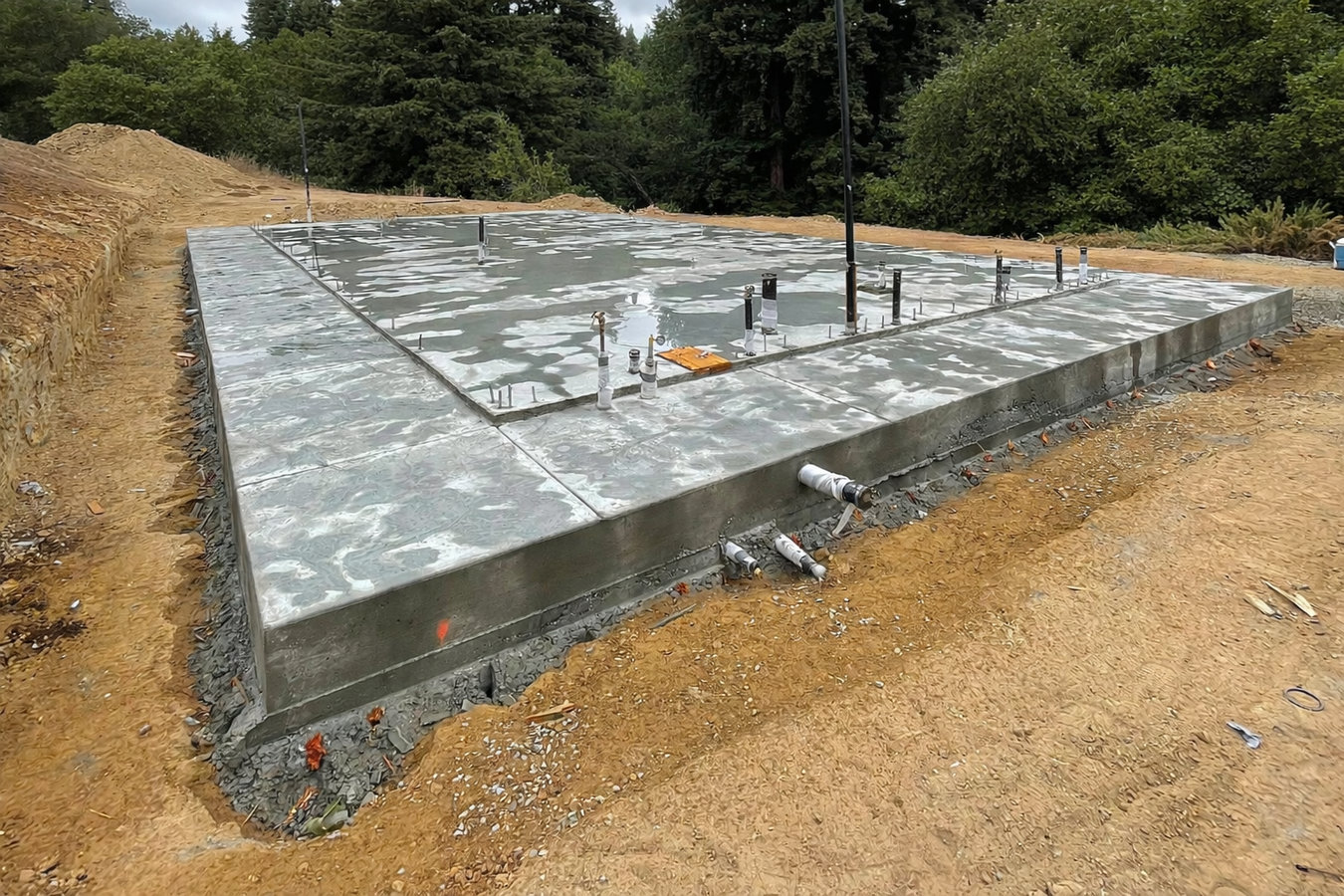
Slab foundation building in Albany, GA involves clearing and grading the site, compacting the clay-heavy soil in layers, installing a moisture barrier and rebar grid, and pouring a 4-to-6-inch concrete slab - most residential projects take three to seven days of active work, plus one to two weeks for permitting.
Albany Concrete manages every stage from the Dougherty County permit application through the final city inspection, so you are not chasing paperwork or coordinating between trades on your own. Because Albany's clay soil puts constant stress on concrete, the prep work underneath the slab matters as much as the concrete mix itself. If you are also planning a full foundation installation for a new build, we can scope both phases together so nothing falls through the cracks.
Small hairline cracks in concrete are normal. But if you see cracks wider than a quarter-inch, diagonal cracks running from door corners, or cracks where one side sits higher than the other, the slab is moving. In Albany, clay soil expanding and contracting with the seasons is the most common cause - and that movement does not stop on its own.
When a slab shifts or settles unevenly, the home's frame moves with it. If doors that once swung freely now stick or fail to latch, or if gaps are forming between walls and ceilings, the foundation may be the source. This is especially common in Albany neighborhoods built in the 1950s through 1970s, where original slabs are reaching the end of their useful life.
If floors feel damp, if you see white powdery residue on concrete floors, or if tile and wood flooring are buckling from below, moisture is migrating up through the slab. Albany's high annual rainfall and clay soils create the right conditions for this. In many cases, a new slab with a proper moisture barrier underneath is the only lasting fix.
If you are starting from scratch - a new home, a garage, or a room addition - you need a slab foundation before any framing can begin. This is the most straightforward situation. In Albany, this applies to a lot of infill construction happening in growing areas south and west of the city center, where lot conditions vary and a thorough site assessment is essential.
Albany Concrete handles residential slab foundations from first soil assessment to final inspection sign-off. Every slab we build includes proper subgrade compaction, a gravel drainage layer, a polyethylene moisture barrier, and a steel rebar grid before a single yard of concrete is poured. We also handle the complete permit process with the City of Albany and Dougherty County as a standard part of every job - not an optional extra.
If your project calls for more than a basic slab - for instance, a monolithic slab with thickened edge footings or a foundation designed to carry an addition tied to an existing structure - we scope that work upfront so you have an accurate number before committing. We also build concrete footings for standalone structures and can coordinate both phases in a single project.
Slab-on-grade foundations for new homes, garages, and additions on bare lots throughout the Albany area.
Full removal of a failed or damaged existing slab, with fresh soil prep and a new pour built for local conditions.
Thickened-edge monolithic slabs for homeowners who need deeper perimeter footings to carry heavier loads on Albany's clay soil.
Albany and the broader Dougherty County area sit on a belt of expansive clay soil that swells when it absorbs water and shrinks when it dries out. That movement is the single biggest reason foundations in southwest Georgia develop problems over time, and it is why a good contractor here spends extra time on soil compaction - sometimes significantly more than what would be required on a sandier lot elsewhere in the state. Albany also receives roughly 50 inches of rain per year, which means moisture management under the slab is not a secondary concern; it is built into every project we take on here. The University of Georgia Cooperative Extension documents these soil conditions and their effect on structures throughout southwest Georgia.
Albany's summer heat adds another layer of complexity. Temperatures regularly push into the low 90s with high humidity, and extreme heat causes fresh concrete to dry too quickly on the surface before it has cured underneath - which weakens the finished slab. Our crews schedule pours for early morning during summer months and use curing methods that protect the concrete through the hottest part of the day. We apply this same approach in Americus and Tifton, where the same soil and climate conditions affect every foundation we build.
We respond within 1 business day. Tell us the approximate size of your project, the address, and whether this is new construction or a replacement. We will schedule a free on-site visit - soil and site conditions in Albany vary enough that a phone estimate is not accurate.
We visit your property, assess the soil, check drainage, and measure the area. You receive a written estimate covering site prep, gravel, moisture barrier, steel, the concrete pour, and cleanup - no surprise line items after you sign.
We apply for the required building permit through the City of Albany or Dougherty County before any work begins. Permitting typically takes a few days to two weeks. A city inspector visits before the pour to verify the prep work - that is a benefit to you, not a delay.
The crew completes site prep, sets forms and steel, pours and finishes the slab, and cleans up the site. Before we leave, we walk you through the finished work and tell you exactly what to do - and avoid - during the curing period.
We respond within 1 business day. There is no obligation after we visit - you get a written estimate and decide from there. Albany's permit process adds lead time, so the sooner you reach out, the sooner your project can move forward.
(229) 304-1369We hold a current Georgia contractor's license and carry both general liability insurance and workers' compensation coverage on every job. You can verify our license status through the Georgia Secretary of State's office before you sign anything - a contractor who resists that check is not someone you want building your foundation.
Every slab we build in Albany goes through the full permit and inspection process with Dougherty County. That city inspector who checks the work before the pour is an independent set of eyes on your behalf. We handle all the paperwork, so your foundation is on record as built correctly. Permit information is available through the City of Albany planning and development department at albanyga.gov.
We serve 12 cities across southwest Georgia, and we have poured slabs on the clay-heavy lots that define this region. Our site prep process accounts for Albany's expansive soils from day one - not as an add-on, but as the standard approach. That is what the American Concrete Institute recommends for this type of soil, and it is what we deliver.
Unexpected charges are one of the top complaints homeowners have about concrete contractors. Our written estimate covers everything we know about your specific lot - soil prep, drainage, materials, labor, and permits - so the number you agree to at the start is the number you pay at the end, barring a genuine unforeseen condition we discuss with you before proceeding.
Albany's clay soil and high rainfall mean the quality of the work under your slab determines how long it holds up - not just the concrete mix. Those proof points are how we back that claim before a shovel hits the ground.
Full foundation installation for new homes and additions, including site grading, drainage planning, and Dougherty County permitting.
Learn moreProperly sized concrete footings that distribute your structure's load through Albany's clay soil without settling or shifting.
Learn moreCall Albany Concrete now - Albany's permit process adds lead time, so reaching out today means your project stays on schedule.